
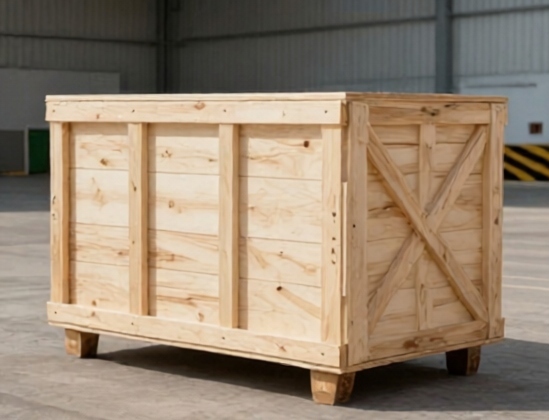
This plywood shipping crate uses 3/8″ panels, 1×3 cleats and a 2×4 skid base to hold cargo up to 84″ x 42″ x 36″ inside, at roughly 200–220 lb empty.
Why ship in a wooden crate rather than loosely
Loose freight takes every bump, drop and strap that handling brings. A wooden shipping crate takes those hits for the product. Its frame spreads impact, so a fork tine, a strap or a dropped neighbour does not reach the item inside. Loose goods also shift and rub in transit, while a crate holds them in place, clean and dry.
A crate makes handling easier too. Skids let forklifts and pallet jacks lift the load safely, and a flat lid lets it be stacked, which loose items cannot do. Carriers see one solid, labelled unit instead of an awkward shape, so it is less likely to be mishandled or left behind.
Crates also cut risk and paperwork. You get fewer damage claims, fewer rejected deliveries and less repacking. For overseas shipments, a crate built from heat-treated wood meets ISPM-15 rules that loose wood packing may not. The outside gives you a secure place for lift points, weight and destination marks.
The extra cost is small beside a damaged machine or a lost sale, and a well-built crate can often be reused for the return trip.
Materials
Size is the inside space for the cargo (length x width x height). The walls are 1-1/8″ thick, so the outside footprint is 86-1/4″ x 44-1/4″.
| Item | Spec | Quantity |
| Wall and lid plywood | 3/8″ exterior, 4×8 ft sheet, 5-ply if available | 4 |
| Floor plywood | 3/4″ exterior, 4×8 ft sheet | 1 |
| Cleats | 1×3 pine, 8 ft long | 12–14 |
| Skids | 2×4, 8 ft long | 3 |
| Panel screws | #8 x 1″ | about 400 |
| Corner, floor and skid screws | #8 x 2″ | about 100 |
| Lid screws | #8 x 1-1/4″ | about 45 |
| Glue | Exterior wood glue | as needed |
Cut list
| Part | Size | Quantity |
| Long side, 3/8″ plywood | 86-1/4″ x 36″ | 2 |
| End, 3/8″ plywood | 42″ x 36″ | 2 |
| Lid, 3/8″ plywood | 86-1/4″ x 44-1/4″ | 1 |
| Floor, 3/4″ plywood | 86-1/4″ x 44-1/4″ | 1 |
| Skid, 2×4 | 86-1/4″ | 3 |
| Long side cleats, 1×3 | 86-1/4″ (top and bottom), 31″ (two ends and the middle) | 2 sets of 5 |
| End cleats, 1×3 | 42″ (top and bottom), 31″ (two sides and the middle) | 2 sets of 5 |
| Lid cross cleats, 1×3 | 44-1/4″ | 2 |
Building steps
- Skid base. Lay the three 2×4 skids on edge, one at each long edge and one in the middle. Glue the floor on top and screw down through it with #8 x 2″ screws every 8″, countersunk. Bevel the skid ends so they do not catch.
- Panels. Glue and screw the 1×3 cleats flat to the inside face of each plywood panel with #8 x 1″ screws every 6″. Use the perimeter cleats plus the one middle upright. The 1″ screws are short enough not to poke through.
- Dry-fit. Stand the panels up on the floor and check that they fit before you glue anything.
- Walls. Stand the long sides on the floor with the end panels sitting between them. Screw each corner from outside with #8 x 2″ screws every 4–5″, going through the long side’s end cleat into the end panel’s side cleat. Pre-drill so the plywood does not split.
- Wall to floor. Screw up through the floor into the bottom cleats of each wall with #8 x 2″ screws every 8″, with glue.
- Lid. Fix the two cross cleats on top of the lid, where they stiffen it without using cargo space. Screw the lid down into the top cleats of the walls every 6″ with #8 x 1-1/4″ screws. The lid comes off by backing the screws out.
Weight and ways to use less material when building wooden crates
Empty, the shipping crate should weigh roughly 200–220 lb. That is an estimate from standard plywood and lumber weights, not a measured figure.
- Use 1/4″ plywood for the walls if the load is light, and add a diagonal cleat on each long side so they do not flex.
- Cut the floor to 5/8″ if the load is spread evenly.
- Skip the middle upright cleats on the end panels, which are short.
Strength notes
- Glue: gluing every joint is what makes this stronger than screwed-only shipping crates.
- Forklifts: with the skids running lengthwise, forks enter from the short ends only. For side entry as well, use short blocks under the floor instead of full-length skids.
- Export: wood used for export must be heat-treated and stamped to ISPM-15. That applies to the skids and cleats. Plywood is exempt, so this design needs little treated lumber.
- Load rating: this is a standard crating design that has not been engineered or load-tested. Build one and test it with the real weight before you sell it. For loads over about 500 lb, upgrade the skids and floor.
Leave a Reply